Unknown's avatar

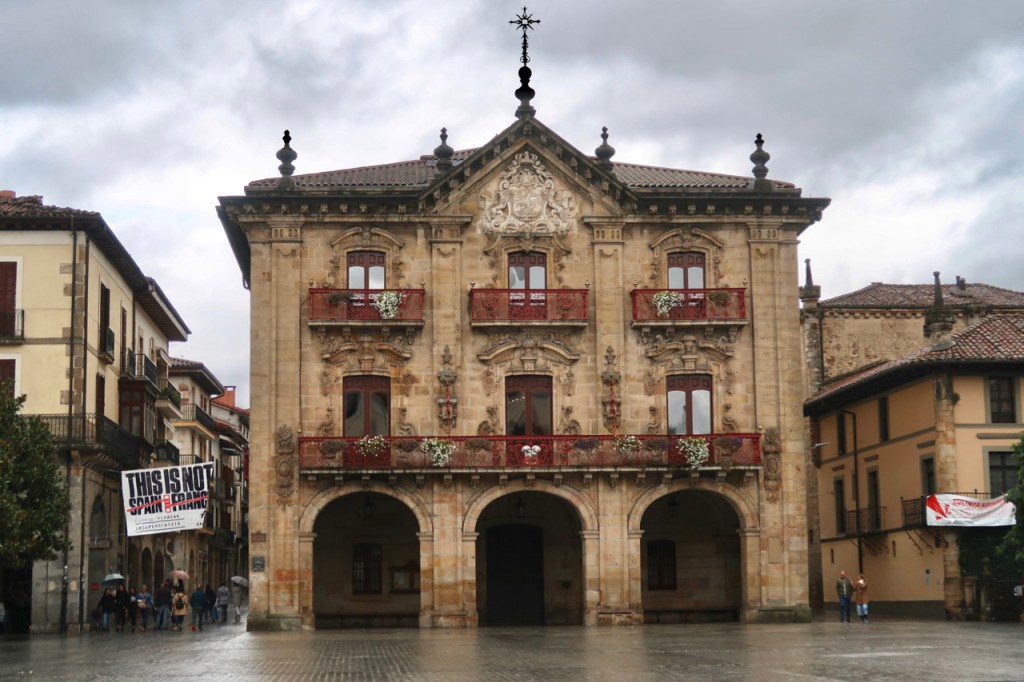
A glass of sagardoa in Oñati, in the rain

We visited Oñati on a wet weekend. It was a place to stop en route to the monastery just beyond the town. Hoping for lunch we parked the car, and went off in search of the main square.

In the end it was easy to find as we could hear it before we could see it, and most people seemed to be heading in that direction.

The square’s porticos were old and imposing, with music pounding out from one corner, where a large group of parents with pushchairs seemed to be registering for an event. Avoiding the rain we squeezed through them, and made our way round to one of the less crowded cafes on the far side of the square.

We chose the first one we came to. We were early customers, and a table in the corner was free, so we settled in with a bowl piled with olives, a plate of hot, paprika-spiced chips, and some sagardoa (cider) to try. The sagardoa was served by a young woman, who poured the golden liquid from about a foot above the glass, explaining that it always had to be poured from height.

Slowly we dried out, lingering over coffee, and enjoying the warmth and the chat as the bar filled up behind us.

Here’s a link with a sagardoa example.

Copyright Georgie Knaggs & The Phraser 2023
Unknown's avatar

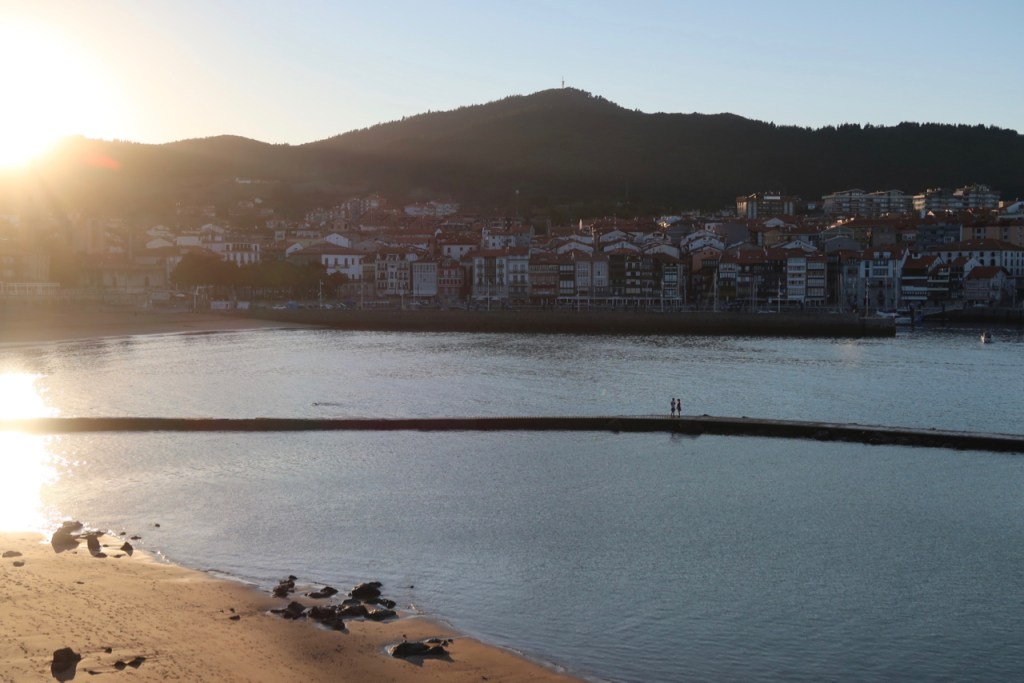
Postcard from the fishing port of Lekeitio

Lekeitio was as unfamiliar to us as the Guggenheim. All we had were memories of some encouraging snippets we’d found online before we left.

Our route from Bilbao began on motorway, and then turned off on to smaller roads, that wound down through wooded hills towards the coast. After a little over an hour we found the signs that told us we’d reached Lekeitio, but we couldn’t find the place we were staying. Instead we plunged into a neverending squash of apartment blocks, with no hint of the sea or our hotel.

Thankfully, by the time we retraced our route, a laundry van had moved to reveal the stone archway leading to the hotel. We drove through into a world of green, with golden cows lazing beneath the trees beyond the lodge. It was an old building (17th century) with rough beams, and stone floors – everything full of character and welcome.

The next day, we went in search of the ocean, and met it on the far side of the built up core of the town. It stretched out to either side of the harbour, beneath cliffs in one direction and along sandy beaches in the other. We chose the high route, but took our time, lingering outside cafes in the sun, enjoying crusted bread, filled with jamón ibérico, or slices of pale, salty goat’s cheese.

At night we strolled the streets again, between the apartment blocks, and around the churches and squares. We ate in crowded bars, where the food and wine were fresh and delicious, and orders taken at such pace that the end result was often a surprise.

On one night, which happened to be over the weekend, we ate and then walked down to the port in the dark. We passed the bars, and the winking gleam of fishing boats and water, and went on towards the high wall that held back the waves. Behind us the town hummed with laughter and chat, voices merging, echoing off the buildings, rolling down the streets, and out to sea. I cannot recall being in any town, where voices dominate all other sound – happy, rooted and at home.

Copyright Georgie Knaggs & The Phraser 2023
Unknown's avatar

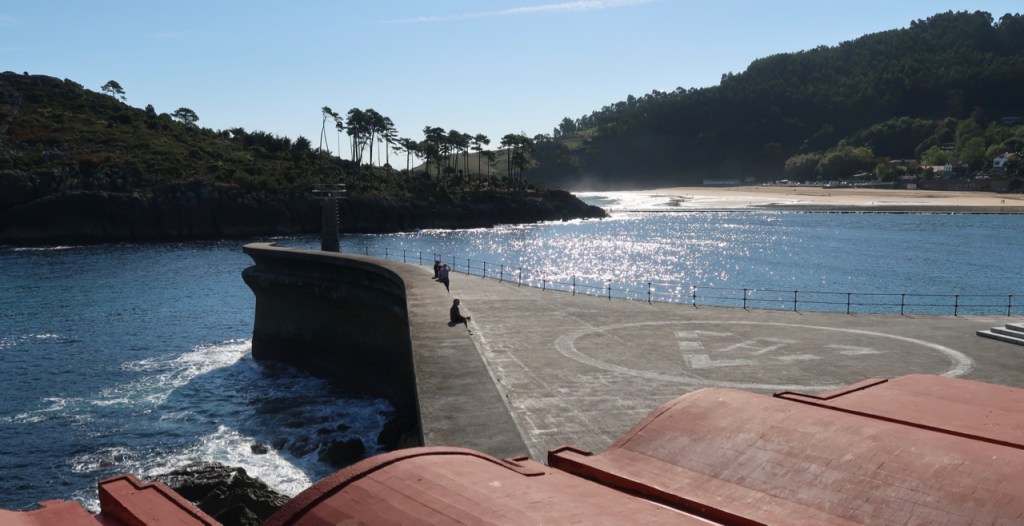
This week’s plan – postcards from the Basque Country

Towards the end of last year, we had days with leave that had to be taken, and no days with space for leave, or time to plan.

A kind friend in Spain did a little research for me. She pointed out that the north west of the country needed a chance to recover from terrible wildfires, and patiently offered a few suggestions about the north east. I followed those up but discovered we were too late for the obvious places, so our search drifted even further north into ‘el País Vasco‘, where it seemed there were still options available.

I’d never visited the Basque Country before, but I’d always wanted to. It and its troubles, have been part of my understanding of Spain. They had coloured my Spanish studies at university, the violent separatist group ETA (Euskadi ta Askatasuna – Basque homeland and liberty) insisting on attention. In 2011 the violence officially ended. In April 2017 the group said it had disarmed. And the following year – 2018 – ETA announced that it had disbanded.

Now, in 2022, we had the chance to visit, to savour the cooking my professor had talked so highly of.

In a few frantic hours we’d booked our flights into Bilbao, reserved a car and found a small hotel in a fishing town, Lekeitio. Our stay was to be for four nights. We knew nothing about the town, other than what we could find online. This included two significant facts – Lekeitio is one of the most important fishing ports on the Basque coast, and it is prone to be wet and windy.

As we packed our bags I wondered what both would mean for our September visit.

Here is a link to the blog that drew our attention to Lekeitio in the first place

Copyright Georgie Knaggs & The Phraser 2023