Unknown's avatar

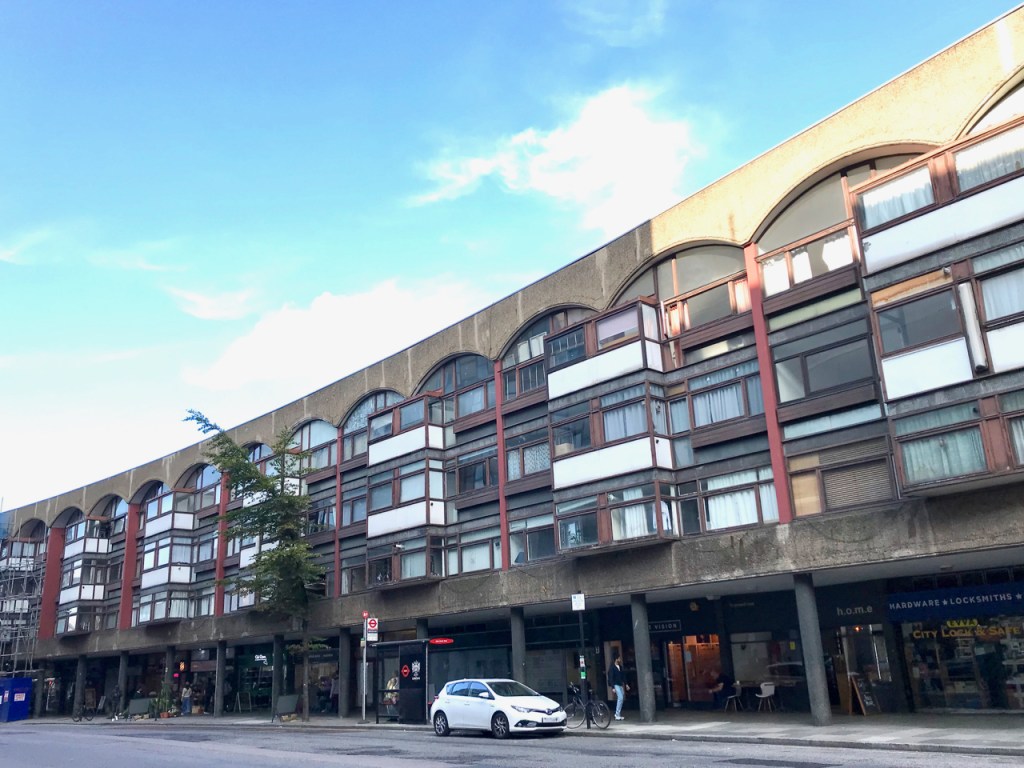
Is this the loneliest tree in London?

Lately I’ve been fretting about this tree, the only street tree on this block. I can’t decide whether it’s the buildings that make the tree look miserable, or the tree that makes the buildings look miserable.

I’m also wondering if, in fifty years or so – perhaps sooner if we’re lucky – we might have a better understanding of trees. Maybe we’ll be treating them with more respect. Perhaps we’ll adapt our cities to suit the trees, rather than expect the trees to adapt to the cities. Maybe we’ll even begin to clear large spaces for proper groupings of trees, rather than lifting slabs of concrete here and there.

Meanwhile I’d love to find out if this tree minds being isolated like this, surrounded by buildings rather than forest, and wafted by exhaust fumes rather than fresh air. Perhaps it’s happy, but what happens to its roots beneath the pavement? Where do they go? How and where do they find their water? Is there anything we can do to make it bigger, to help it help us to hold off extreme heat?

It would be so much easier if it could talk.

Copyright Georgie Knaggs & The Phraser 2023
Unknown's avatar

Some more about Smithfield, London

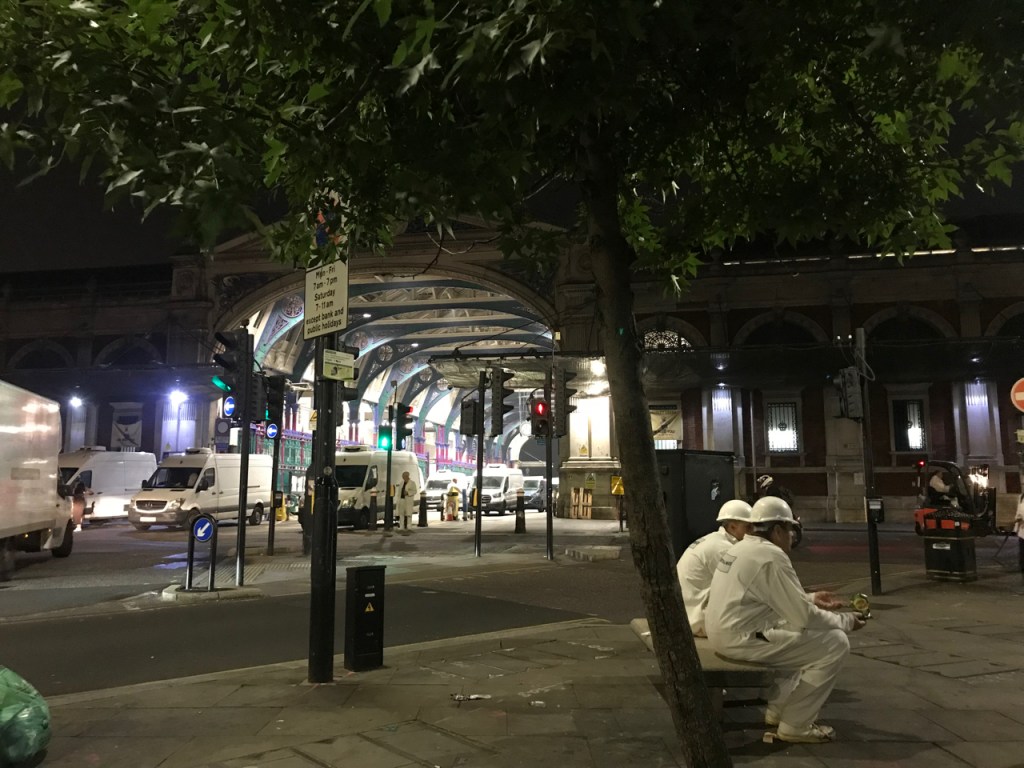
This is a postcard so I’ll just keep it to snippets I’ve picked up during wanderings around this part of London.

I love the Smithfield area. To me it still has real character. It feels individual and properly alive, with some of its medieval roots still visible thanks to being spared by the Great Fire of London in 1666. It also seems to have resisted the need to stagger upwards into high-rise and glass, or to fill itself with corporate chains.

The old market itself is divided into many parts. Last night we walked through the section that links Long Lane to the start of Cow Cross Street. It felt a little quieter than usual, perhaps because the market is preparing for relocation. Its buildings are due to be taken over by the Museum of London.

Strange to think that the market’s been there since at least 1381, when the old city banned the slaughter of livestock within its walls, and forced the trade out to Smoothfield. Smoothfield then became Smithfield, and Smithfield became increasingly associated with butchery. Crowds of animals came and went, either alive or as carcasses. So did a number of men and women – some being tortured, some burned, some executed, and others hung, drawn, and quartered. Quite gruesome, but it wasn’t all like that.

The medieval priory of St Bartholomew’s used to be on the other side of Smithfield. It flourished until Henry VIII took against it, but thankfully its hospital and one of its old churches survived, both of them flourishing again and celebrating their 900th anniversary this year.

Maybe it’s their prayers and healing that have balanced out the bloody scars, leaving the soul of Smithfield at peace.

Copyright Georgie Knaggs & The Phraser 2023
Unknown's avatar

It was a hot drive into London today

Today felt warm, and then hot almost as soon as the thin morning cloud lifted. Driving into London in the afternoon felt hotter still, and it was – 31°C on the outskirts, and the air still as the sun. Around Trafalagar Square the pavements were full of shorts and flip-flops, and tourists melting their way around the sights, one or two wobbling into the road like bambis on their Lime Bikes.

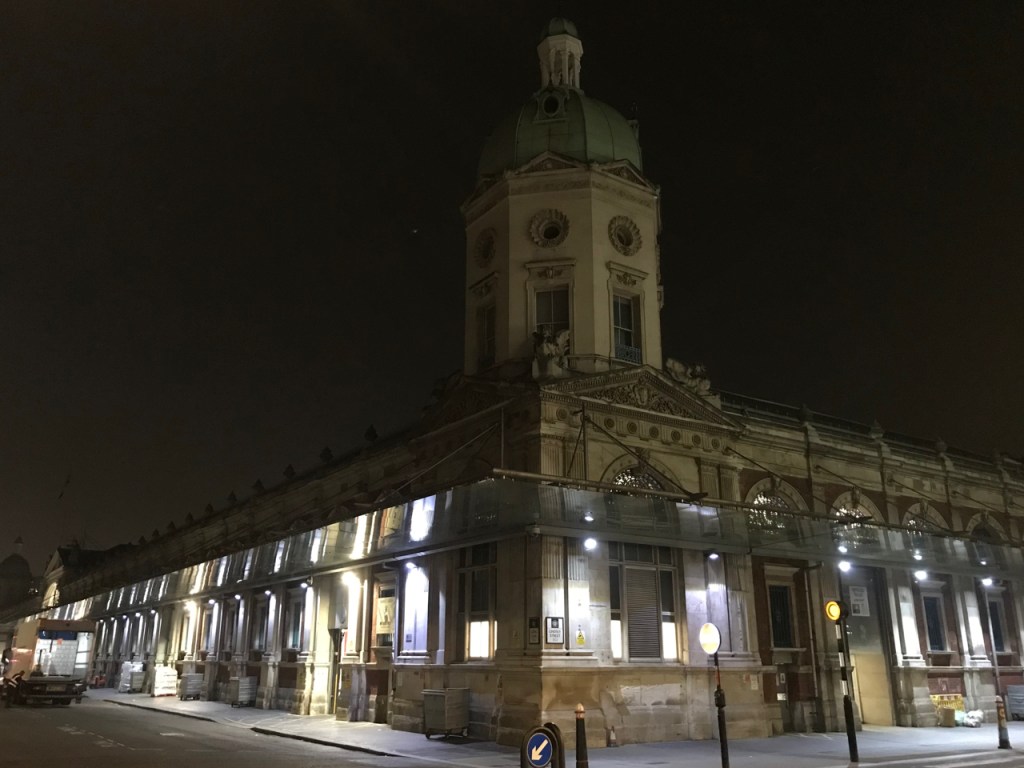
It is only now, after midnight, that the temperature feels a properly pleasant 21°C. The moon, dusted orange with Sahara dust, is hanging on its side above the city, and the hot dog cart is still doing business outside the station where our train came in at the end of an evening with friends. From the station we wandered up the street to see the Smithfield Meat Market with its bright lights and white vehicles loading and delivering. Witnessing the traders at their work felt a little like stepping into a slow motion time warp, especially knowing that their move out of the area will happen in the next few years.

Their absence will change this slice of London.

Copyright Georgie Knaggs & The Phraser 2023