Unknown's avatar

Trying to tame a wisteria

I had my head inside a wisteria today, trying to help find the source of the whipping vines creeping into the neighbour’s space. It was quite a task, and took a large chunk of the morning to find the site of each fifth bud to make the summer prune as directed by the Royal Horticultural Society.

The wisteria was not mine, but it left me wondering about the origins of this overwhelming plant. Beautifully controlled ones look amazing when they’re in flower but getting them to that state takes the skill of extreme gardeners – the marathon runners of the gardening world.

So, here are a few points that might make you pause if you’re thinking of picking up a pot of this purple beauty in its tiny days.

  • Wisteria is poisonous (only if you eat it).
  • There are Japanese, Chinese and American varieties.
  • All of them have the ability to spread their vines out far and wide.
  • The vines will climb trees and strangle them, if left unpruned.
  • The flowers are fagrant and can be purple, pink, blue or white.
  • The plants have long, hanging seed pods which, when dry, pop open spreading their seeds away from the parent plant.
  • Wisteria should be pruned twice a year – once in late summer, and again in late winter.
  • The plants grow with such vigour you can almost see them spreading.
  • The flowers are fagrant and can be purple, pink, blue or white. They look dramatic, hanging down in long clusters.
  • Not all of them flower.
  • Wisteria can last for decades, the main vine becoming as a thick as a small tree trunk … with exhausted gardeners littered around its base

If you’re looking for a challenge – a ‘real plant’ to garden – this might be it.

Copyright Georgie Knaggs & The Phraser 2023
Unknown's avatar

A little more about tomato plants

A week ago I posted about the smallest of my tomato plants, one of the crop still struggling up from the seeds that I planted from the same packet at the same time, slightly late in the season.

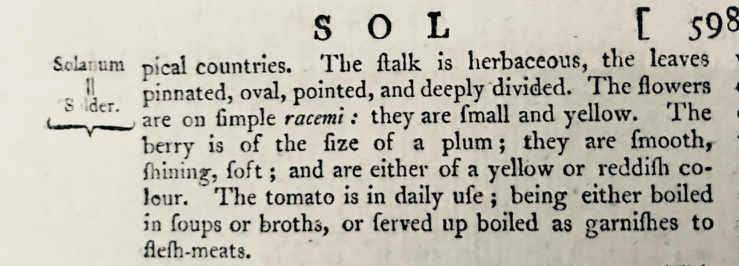
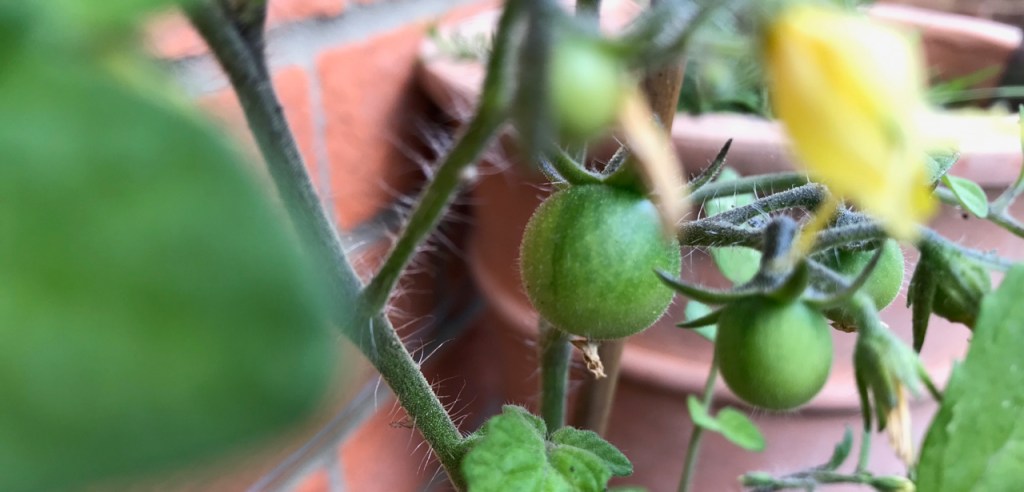
The smallest of the plants is still not making much progress, but today I looked at the biggest of its siblings and discovered these tiny ‘love-apples’ hiding in amongst the leaves. The name love-apple is new to me, and only recently discovered thanks to an old Encylopaedia Britannica, published in 1797, (if I have got the Roman numerals right – MDCCXCVII). This was how it described the tomato, entered under ‘solanum’.

We may have added to the way we eat tomatoes since this entry was listed but, as far as I can discover, they are still classified botanically as berries.

A final piece of tomato trivia that I found out from more recent online sources, is that the world’s largest producer of tomatoes, by far, is China.

Copyright Georgie Knaggs & The Phraser 2023

Unknown's avatar

My tomato plant

This strange summer is my first attempt at growing tomatoes from a packet of seeds. The plants are trying, but not in a very uniform way.

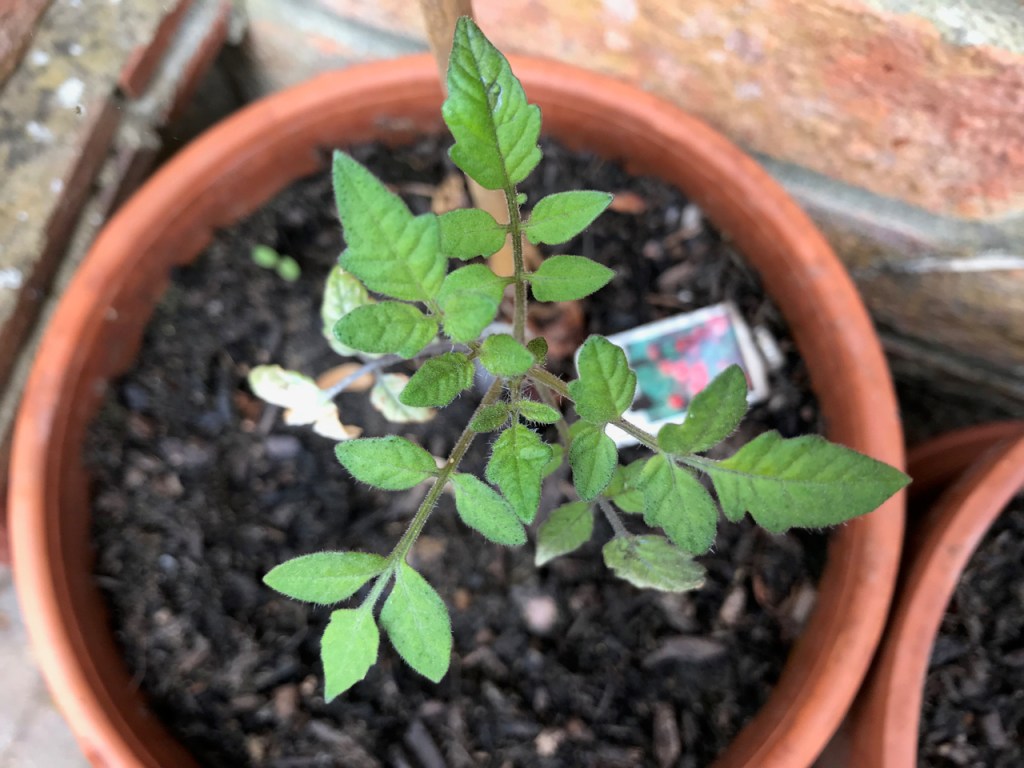
The one in the photograph above began as a seed, indoors, in late May. Then, together with all siblings from the same packet, was placed into covered sunshine for about ten days, and then transferred with the others out into pots along a wall in full sun. Since then each plant has had the same amount of love and neglect, and been exposed to the same bouts of weird weather.

Their first week out was one of brisk winds and cold nights which turned them all pale and wibbly, and their leaves yellow, but slowly the wind died, and the sunshine switched from feeble, to full beam brilliance. That weather lasted for a few weeks, so hot that on some days the plants were actually put into the shade for protection, before being moved back into the full sun. Then we come to this week, where temperatures have dropped again, and rain is either drowning the plants, or drifting over them in teasing waves.

The question is, how will this crop do? The strange thing is how different each plant’s progress is, compared to its neighbour. Right now it seems that some of them might do okay, and others of them probably won’t, and I’m not sure any will produce tomatoes. The one in the photograph above is the runt of the litter, embarrassed by a few of its bolder siblings who are now twice as tall, and already flowering.

So will 2023 be a good vintage? I have no idea. Just getting a tomato will be amazing … if it happens.

Copyright Georgie Knaggs & The Phraser 2023