Unknown's avatar

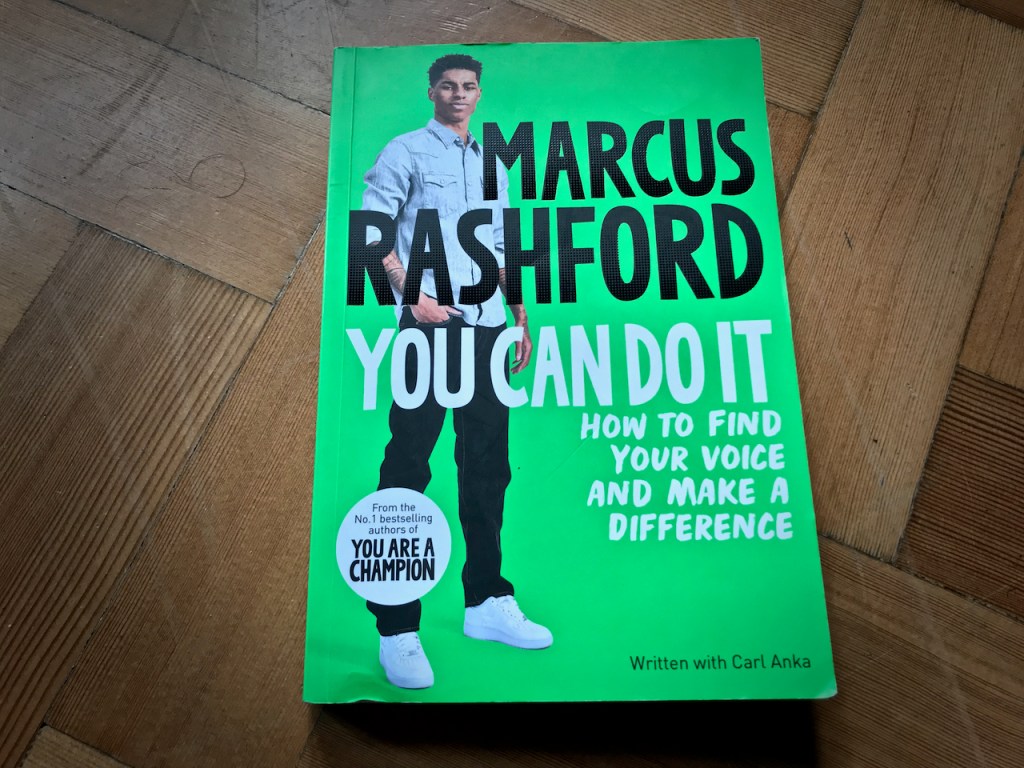
Postcard book review: Marcus Rashford, You Can Do It

How to find your voice and make a difference

Here is another book that I have enjoyed reading. This time it was with a young footballer. Together we learned so much from this book, thanks especially to the way it encouraged discussion about the ideas being suggested.

This is the first Marcus Rashford book I have read, and I would highly recommend it to anyone looking for books that might interest children whose main enthusiasm is football. The content is told from Marcus Rashford’s point of view, highlighting lessons he’s learned on his journey to becoming one of England’s greatest strikers. The other insights in it are around how to develop your voice off the football pitch. It is written with respect and understanding, both of the challenges faced by those caught in less affluent parts of society, and of the value of support given, particularly around food.

The writing is clear, and there are black and white graphics on every page to help break up the text.

(The book is a Macmillan Children’s Book, published in 2022)

Copyright Georgie Knaggs & The Phraser 2023
Unknown's avatar

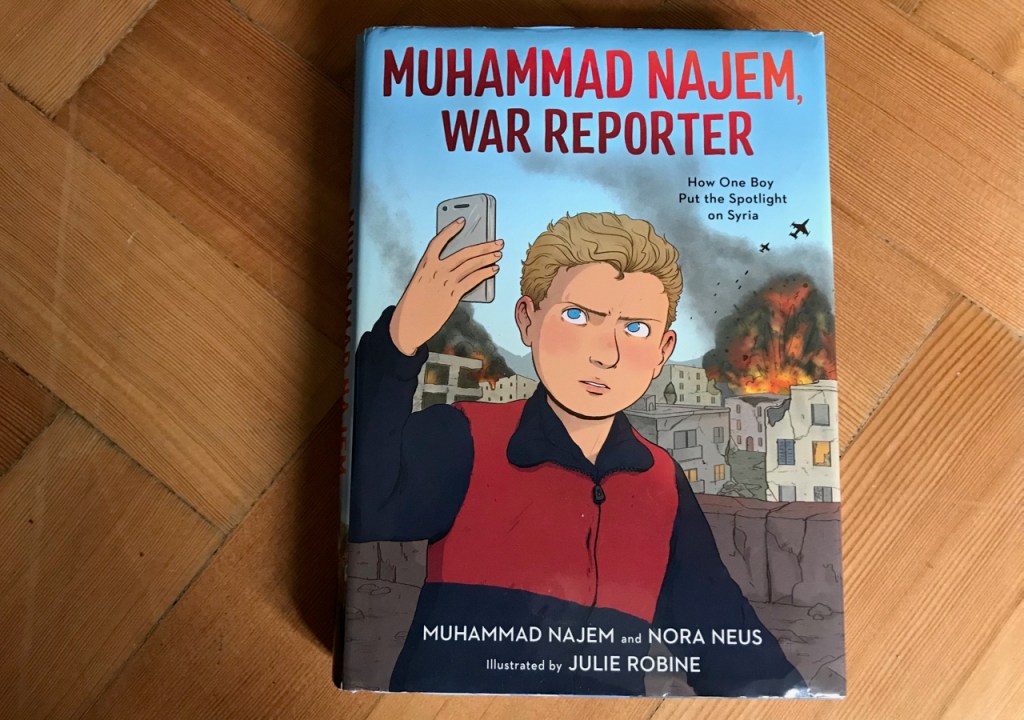
Postcard book review: Muhammad Najem, War Reporter

This book is a true story about the impact of the war in Syria on a young boy, Muhammad Najem, who grew up beneath the bombs. The circumstances are awful, but even though this graphic memoir never hides from that reality, the way it is told left me thinking not about damage, but about the power of the hope and courage that grow in the roots of loving families.

The story begins at the outbreak of the Syrian War in 2011. Muhammad is just eight years old, and has two big brothers and both parents still alive. Much will change. We are shown everything through Muhammad’s eyes, seeing the horrors unfold to the point where, aged 15, he feels compelled to record the damage on a mobile and send it out into the world via social media.

“I want to show the world what is happening in Syria.”

Muhammad’s posts are seen. I can remember seeing a few on Twitter, and I struggled to believe then that they were real. In America the same reaction was happening, but one young reporter, Nora Neus, decided to contact Muhammad. She followed his posts closely, and over the years since has got to know the family and their lives, eventually working with Muhammad, and the illustrator, Julie Robine, to produce this book.

I had the great privilege of reading the book with a young reader whose family are from Syria. At the time I was worried that it might bring the trauma too close, but it did not. Rather there was joy at being able to read about ‘home’, and a hunger for the intimate family details, particularly the love story that emerges at the end.

I think this is such a powerful book, mainly because of the way it manages to bring us so close to Muhammad and his family. We live the bombardments beside them, and then, right at the end, just in case we might be doubting the reality of any of it, there are photographs confirming what we have been shown.

How did I come across this book? Nora Neus, is the daughter of a friend of mine.

The first edition of the book was published in 2022 by Little Brown and Company (New York and Boston)

Copyright Georgie Knaggs & The Phraser 2023
Unknown's avatar

A first visit to the National Portrait Gallery

Our visit to the National Portrait Gallery today was fascinating – plenty of portraits from the Tudors onwards, and the perfect amount of information beside each painting to add another layer to our morning of seeing who was who, and why they were there.

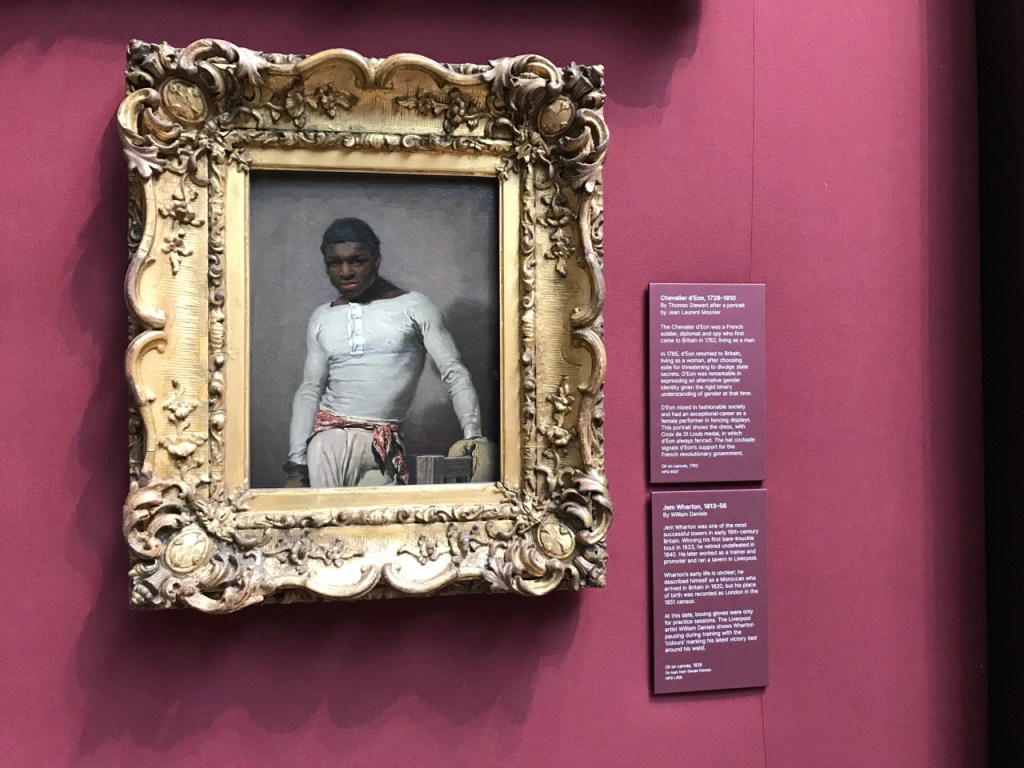
The man above is Jem Wharton (1813 -1856) painted by Liverpool artist William Daniels. This little portrait was on one of the top floors of the National Portrait Gallery, just off from rooms full of huge paintings in lavish detail of various Tudors and members of their courts. What caught my eye was the attitude staring out from the frame, the occupant so watchful of the man who would paint him.

Who was the subject? The information beside the painting told me that it was Jem Wharton, one of the ‘most successful boxers in early 19th-century Britain’, winning his first bare knuckle fight in 1833, and retiring undefeated in 1840. He’s been painted wearing boxing gloves but apparently these were only for training sessions and not actual fights. The detail that he had paused in the middle of training for the artist, made sense for me of the impression I had of his reluctance to be still and to be studied.

This was just one of the many paintings that made me pause and really indulge in the irresistible chance to wander up close to the subjects – to stand and stare without having to look away while I tried to see what the artist had seen.

I loved the visit. My two main impressions: first – the powerful propaganda potential of portraits; and second – there were a lot of portraits of men, painted by men. There were women, but they only really started to come into their own as we worked our way down to the lower floors.

If you’re thinking of going, you’ll need at least a couple of hours and you’ll probably want to go back again.

Copyright Georgie Knaggs & The Phraser 2023